Author Archives: Sam

  1. Mind Over Matter

    Leave a Comment

    This phrase came to mind during and after a session which had me lying on the ground gasping, legs burning, and looking at the seconds tick away between sets. I had came to terms on my third set that this would be my last set even though the work out called for four. As I laid there gutted the last thirty seconds of rest was near and my mind said, “go.” My mind knew what it was about to endure, but it also knew it would hurt so much more to quit. When finished sprawled out on the floor it amazed me how much physical training is apart from the mind and mental strength will carry us through the “dark place” when the body has given up.

    image1

    Our reasons to engage in physical activity are all different. For the parent or grandparent may be doing it for longevity, to hold, and run around with their child or grandchild. For the competitor subjecting their body to rigorous training day in and day out for that extra rep or to gain an extra tenth of a second on the opponent. When your body screams to stop, but your mind says, “go.” For each scenario the reason is there, but how bad do you want it? How bad do you want to be here to walk your daughter down the aisle? How bad do you want to play catch with your grandson? How bad do you want to run your first 5k? How bad do you want to be healthy and off all medication?  All of these desires require effort and raise the question of how far are you willing to go to achieve it? Will you lose sleep so you can get the time in that it requires before you go to work and fulfill your roll as a spouse and parent at night? There is no time for excuses, just action. Start a regimen that allows for consistency and with consistency comes habits. If someone were to ask me what I would be doing at 430AM tomorrow or in three months the answer remains the same. I will be training. Sure, sleeping in until it is time to go to work sounds enticing, but there is no reward in that. There is not an euphoric feeling of achievement by hitting the snooze button. When you know you are doing what it takes it feeds the mind and builds confidence in your abilities. In the past, I have found that morning sessions have been the most beneficial to my training. It doesn’t allow things from work, poor food choices, or other things of life to mentally block my focus. When we are talking about tenths of seconds 99% focus will not cut it. The discipline gained from waking up each day for training caries into work which will flow into your marriage and parenting rolls. Doing things that are hard equip us to better handle the stresses of life.

    image1-2

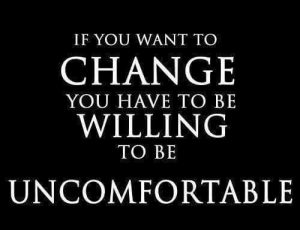
    We are subject to great things if we are willing to get uncomfortable. Integrity is built by the hard times that require us to endure with progress on the receiving end. The “mind over matter” mentality is a one size fits all. It’s talking to your spouse, at your place of employment, or in your spiritual life. If we always chose the easy route we would never achieve goals, aspirations, and dreams which would be a very depressing lifestyle. Be honest and picture in your mind standards for yourself that are uncommon. Be brave, focus, strap in, and….. “GO!”


    Rowdy Hurst, Fitness Matters MetCon Rowing Coach. https://fmrowing.com/metcon-rowing/

  2. Margins, expectations and perspective.

    Leave a Comment

    perspective-blog-1-a
    I actually wrote some of this short blog in reverse as I started to get some clarity on a very mixed morning. I am not sure what purpose it will serve other than knowing that on this occasion it’s intended to make me feel better! I’ve had a great weeks training. Hard but good, and although there are probably a handful of reasons why my session didn’t go to plan,  the overriding harsh reality is that today the margins just felt too fine.

    As we progress in our training and over time get faster, many people think rowing gets easier. It doesn’t. The margins get smaller and the effort required to improve gets much greater. I’m now in a place where I know what I can achieve and what I’m currently training for, but the margins I’m working with mean that timing is fundamental to success. Mind and body need to align. I thought that today was the day, but only a very short way into a time trial reality hit and I realised it wasn’t to be.

    The reason TT’s can be so hard mentally is because we have an element of expectation, usually as a combined result of factors such as past performances, certain personality traits and what we perceive others expect from us (the latter to a lesser extent in my case). This creates added pressure, often taking the anticipation, stress and expectation past the point of being productive. If at any point we have the thought that our target isn’t achievable like I did today, we leap ahead in our thinking to the end of the session where we perceive failure in all it’s ugly glory, with every negative emotion that goes with it. So we decide to stop…because what’s the point? May as well feel crap without the effort! Without those expectations however, we’re much more able to carry on regardless, step into the unknown and see what lies ahead. The vast majority of these processes are subconscious.

    When I stopped I was angry, really angry. Something which I rarely am because it doesn’t work for me. A quick check in with my inner sports psychologist simply told me ‘Do not dwell’. That was going to be hard.  In many ways harder than the training I have completed this week! The easiest option would have been to walk inside and sulk for the rest of the day, but that wouldn’t be fair on my family. So instead I attempted to move on and jumped on my trusty alternative, the Wattbike and dispatched myself accordingly with a 6 x 5000m (rest 2m) session. That made me feel a little better, because as punishing as it sounds I actually find it very rewarding.

    img_4866

    Being passionate and caring about things as much as we do most of the time drives us forward, but caring too much can really hurt when things don’t fall into place.  Nobody died today and this effort will clearly keep for another day. I know this. It’s important to me yes, but in the grand scheme of things it’s very much a #firstworldproblem. When I walked back into the house and my son Zach said ‘I love you Dad’ I was instantly reminded of what really matters. That’s what’s important. That’s persepctive…I will live to train another day.perspective-blog-2

  3. Where is Your Comfort Zone?

    Leave a Comment

    sams-comfort-zone-blogObviously there are multiple answers to this question, but most of you reading this will relate to it in a training capacity. Sessions we’re familiar with or find easier to complete are definitely in our ‘comfort zone’, whereas those we find physically or mentally demanding are clearly outside it. From my own perspective I’m learning a whole new answer to this question.
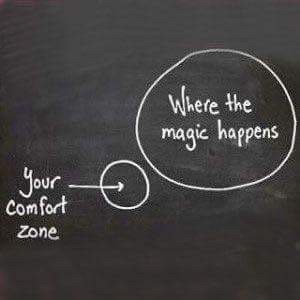

    Before I started any form of rowing coaching I was your regular competitor. Although there’s plenty to dislike about racing in my opinion, it was effectively my comfort zone. I have often wondered why I do it to myself , but up until recently carried on regardless. Competing has been a part of my life for as long as I can remember. It’s what I do. Putting myself in these positions has over the years not only become the norm, it’s also become what people expect. More recently as my coaching role has developed I have participated in events on more than one level,  as a coach, a cox AND as a competitor aiming for the podium.  All within the same event! This isn’t an impossible task but it does involve the need to divide attention and also gives a very different feel to race day. On these occasions, making my way home, I have  often wondered whether I could have been any better at any, if not all of the roles I tried to fulfill during the day. I’m yet to reach a conclusion on that one.

    img_4850

    Up until this point despite the task of multiple ‘hats’ being a large one, there’s always an element of comfort in knowing that I’d compete…the bit that I do…the bit that I know well. Last week however, I was able to try something new. To step outside my comfort zone, which is ironically the opposite to a lot of people’s! The British Rowing Indoor Championships (BRIC)  took place at the Olympic Velodrome and  I had initially planned to race when I entered well in advance of the date.   A few months prior however I took the decision not to compete until after Christmas. It felt like time to change tack. Largely as a means to encourage growth and personal development. I was asked the question many times before, during and after the event as to why I wasn’t racing when there was essentially a medal for the taking. My answer – My focus is currently elsewhere in relation to rowing and as I always like to be totally prepared for an event I didn’t feel like this was the right time.  That isn’t to say things will ever be perfect on the day, but I always aim to give myself the best chance. The real test for me was to show up and tolerate the discomfort of not doing what I usually do as a way of being able to maintain my focus on the other goals I have in relation to the sport. I recently chose not to compete at the Welsh Indoor Championships for similar reasons but wasn’t exposed in the same way as I wasn’t able to be there on the day. BRIC was my first opportunity to stay away from the race floor, focus on coaching and generally enjoy the day.

    When I arrived I realised, unknowingly, that I had stepped firmly out of my comfort zone.  No race environment and prep to fall back on, no nerves or apprehension, but still the lure of a medal. Thankfully my category was early in the schedule and my race came and went without temptation lingering for too long. Once I’d surfed that temporary urge from there on in I focussed on enjoying the races, seeing so many people take themselves outside of their own comfort zones, with many experiencing the unique race environment for the first time. The day was a great success and ended  with a night out in London of the highest quality.  The indoor rowing community really are a great bunch.

    Was I glad I did it this way? Well I definitely didn’t miss the race build up! I’m proud I stuck to my plan and stayed true to the journey I have currently put myself on, but perhaps there’s a part of me that was left wondering what might have been (that ‘familiar’ part of me). Either way I have a deeper understanding of myself which is great from a personal development perspective. I’ve now experienced all three scenarios: competing, coaching and competing, and just coaching.

    img_4849

    When I honestly reflect on my experiences, I don’t think I’d agree that progress (in performance terms) is purely to be found outside of comfort zones. From a personal development perspective however what seems to be the case, as far as I’m concerned anyway, is that once something becomes routine it’s probably time to look beyond.  What I’ve also found after avoiding taking this step for quite some time is that often that place beyond isn’t nearly as daunting as you first think. One thing’s for sure if we want to change and make improvements in our life we need to find the courage to take that first.  There’s a whole lot to experience out there.


  4. What’s Your Goal?

    Leave a Comment

    15008134_10154205148757874_1670541365_oI’ve spent time this week reflecting on conversations I’ve had with several clients about motivation for training. Mainly from the perspective of how to approach things when motivation feels as if it’s lacking. It’s apparent that a lot of people start to become quite self critical and intolerant when motivation is harder to come by and as a result they begin to question the point of things, seem a bit hopeless and definitely find it hard to let go of all or nothing thinking. There’s certainly no magic fix in these instances, but it’s important to reconnect with what started you on your path in the first instance. What’s your goal?

    There’s no one size fits all with this.  We all have different personalities and lead different lives and therefore our reasons for exercising will be dependent on many factors. Generally speaking though I think motivation for training falls into 2 distinct categories:

    1. Progression and improvement in performance.
    2. General health and well being, including:
    • Weight loss
    • General fitness
    • Lifestyle improvement
    • Improve confidence
    • Stress management
    • Interest/stimulation

    It is very likely that your reasons for following a training plan or exercise regime will be as a result of one or more of the above, and quite possibly the case that these reasons change over time. All of these reasons are of course completely valid and it is possible to be following the same training plan as someone else whilst at the same time having completely different goals. That’s the beauty of exercise. Target one goal and there will undoubtedly be other positive benefits.img_7899

    When motivation comes into question the best advice I can give is, concentrate on what you want from your training not what someone else is trying to achieve. They could well be on a separate journey. Training doesn’t have to be brutal, prescriptive and directive at all times. If it is, then resentment is the likely outcome…and since when has resentment helped with motivation? Take ownership of your training, approach every session with a clear goal for that session and make adjustments accordingly if that’s what the circumstances dictate. Let go of attachments to all or nothing thinking. Recognise the dangers of an inability to allow yourself some ‘room’. The only real failure is you sabotaging yourself by failing to recognise what’s genuinely needed on a session by session basis.

    In my generic training plans I offer individual pace guides that cater for the whole spectrum of participants, from those who are trying to push on and improve their times, to those who are more focused on their physical, emotional and psychological well being. Ultimately training and performance goes in waves, nothing in life is constant.  There’s a natural ebb and flow to everything. The challenge is in striking the right balance between pushing when you can and being flexible when the circumstances change, whilst at the same time giving yourself the credit to know what’s best.

    15053198_10154205334147874_1337960165_o


  5. The Importance of Accurate Stroke Rate

    Leave a Comment

    I have had several questions recently about how to control stroke rate and the importance of accuracy. In my training, and the plans I write, many of my (longer) sessions are controlled by stroke rate and pace targets in an attempt to make every metre rowed a productive one. I’m aiming for a consistent stroke profile and power delivery that can be transferred through the rates. In simple terms the lower the stroke rate, the slower the pace/500m should be. This sounds obvious to me as I write it, but more and more often I see people overloading their stroke which in my opinion doesn’t result in faster times.

    14686018_10154131822912874_1594644811_n


    There are of course many different and effective ways to train. This system however allows everyone regardless of ability, to follow the same core principle without the need for individual physiological assessment, planning or heart rate monitoring, which is very costly and not readily available. I have for a while now referred to this system as ‘gearing’ as it encourages people to hold a higher and more powerful stroke for a longer period. The analogy being that you wouldn’t want to drive your car for long periods at high speed in  a low gear just because you could, in recognition that this wouldn’t be efficient, wouldn’t transfer to any greater speed in top gear and could potentially cause damage.

    img_1009

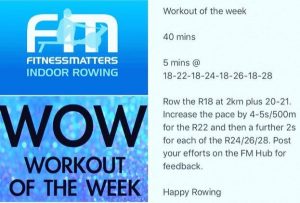
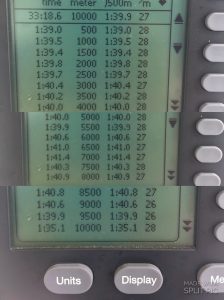
    A good example of this can be seen in my session below which was the FM Rowing Workout of the Week. As the stroke rate increases so does my pace/500m. Of course there is a calculation to get the right numbers for all the varying sessions, but you will get the idea. All the stroke rates are correct for each 5 minute period.

    img_4190

    img_4191

    So how important is this as a consideration in training? I think it is incredibly important for a few reasons. It shows discipline and ensures we focus on quality during any given session. It allows for direct comparisons with future or past sessions at the same rate in the knowledge that they are accurate. It encourages consistency by ensuring that the correct pressure is applied at each rate as often as possible. The more consistent we are the better quality we produce, the greater the training effect, the more controlled we are at pacing sessions and so on. Obviously there’s some room for movement, but as a rule our ‘gears’ should be within certain parameters.  Gearing is the foundation on which all of our FM Training Plan sessions are built.

    14686070_10154131824467874_199945754_n

    How do we hit the correct stroke rate each minute? Everyone has a preference on this. There are numerous ways of achieving the same goal in this instance. It’s important to add that it won’t make or break your training if this isn’t bang on every time, but it will also help to pass the time in longer drawn out sessions! The simplest way is to watch the ‘spm’ in the top right of the monitor and keep to a rhythm at the desired rate. Personally I count strokes each and every minute following the format below.

    • R18 – 3 strokes every 10 seconds. So the first of each 3 is on 0/10/20/30 seconds and so on.
    • R20 – 1 stroke every 3 seconds. So stroke on 0/3/6/9/12 seconds and so on.
    • R22 – 11 strokes every 30 seconds. So the first of each 11 is on 0 and 30 seconds and so on.
    • R24 – 6 strokes every 15 seconds. So the first of each 6 is on 0/15/30/45 seconds and so on.
    • R26 – 13 strokes every 30 seconds. So the first of each 13 is on 0 and 30 seconds and so on.
    • R28 – 7 strokes every 15 seconds. So the first of each 7 is on 0/15/30/45 seconds and so on.
    • R30 – 1 stroke every 2 seconds. So stroke on 0/2/4/6/8/10 seconds and so on.
    • 30 plus – close your eyes and go for it!!

    Happy rowing.

  6. Our City Regatta Journey to the Guildhall

    Leave a Comment

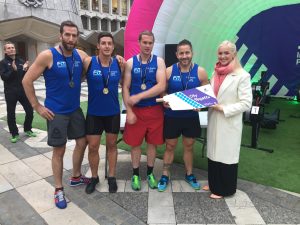
    Our journey to the City Regatta final at the Guildhall in London started about 3 months ago when I asked 3 other guys to join me in an invitational 4-man team to race others over 1000m. Graham Benton, Dave Marshall, Dan Stanley and I formed, on paper, what looked like a pretty solid crew. This offered us a chance to compete in a unique environment as a team in what is essentially an individual sport.

    img_2061

    Bristol City Regatta

    Our first assignment was to race in Bristol back in August at one of the 4 regional events hosted by the sponsor Investco Perpetual. The other 3 venues in London, Edinburgh and Leeds were equally as impressive a set up as ours was in Millennium Square, Bristol. The outdoor race atmosphere was great and no expense was spared as the event ran very smoothly. We had 3 heats which we came through relatively comfortably, easing through the gears and opening up a little in the final with a 2 minute 58 second effort.

    Winners at Bristol Regatta

    Winners at Bristol Regatta

    We had a few months then until the final and, after chatting things through, we decided we would prepare thoroughly. On the day the 4 of us all travelled from different parts of the country and met up at the hotel accommodation that had been generously provided  by the sponsor. Off to the Guildhall yard we went, arriving about an hour before the start time. Following a warm up, where I’m not sure how warm we were given it was pretty fresh outside at 5.30 pm, we watched the ladies final and then we were ready to race.

    Collecting our trophy

    Collecting our trophy

    We were very fast out of the blocks and immediately opened up some distance between us and the rest of the field. We kept full pressure on until around the half way mark with the team averaging around 1.25/500m, giving us decent buffer. Whilst we didn’t ease off totally, we then came home a little more comfortably than anticipated in an overall time of 2 minutes 53 seconds which was 10 seconds ahead of second place. The whole race was a bit of a blur like they can be, but we definitely got a decent blow on, a bit of leg burn and a touch of ergers’ cough!

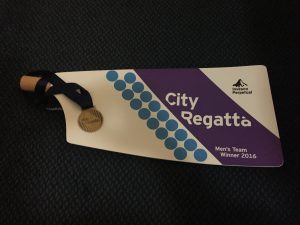
    Winning team's oar.

    Winning team’s oar.

    Suited and booted

    Suited and booted

    The rowing was over, but it was back to the hotel, dinner jackets on and just the start of the evening ahead which was quite spectacular. Multiple Olympians were among 400 guests seated in the Guildhall at the event hosted by Sir Steve Redgrave. A fantastic and memorable evening was a fitting end to this year’s journey, one that, as a 4, we have agreed we will be defending next year. For me personally I am glad to see the back of that style of training for a while and excited to focus my attentions elsewhere.

    A spectacular venue for dinner.

    A spectacular venue for dinner.

  7. Catching a wave….

    Leave a Comment

    I have always said training goes in waves. When you are on a wave everything is going well, you feel motivated and feel you are making progress. Hitting your daily targets seems routine and you look forward to the next session. The other side of the coin feels more like treading water. Effort levels are the same, but everything seems a bit of a slog. Targets are more difficult to reach which is harder to be motivated for. The thing is you never know how long each respective streak will last so you must remain consistent and dig in through those perceived hard times as they are ultimately building the foundations for catching the next wave.

    images

    Up until 7 days ago I had definitely been treading water for what felt like an eternity, to the point I questioned whether my peak was gone. It was ever since I had got back from a family holiday, had a bug and missed a whole nights sleep that I just seemed to fight with the machine to hit my numbers. I started to resent how hard things felt and the thought of another ‘hurt session’ was bottom of my list, but I kept the faith. My relentless consistency and a change of mindset last Saturday and things felt like they were on the turn finally. The mental side of all sports, not least rowing, is huge and tentatively it felt like I had at long last found a wave.

    Our race set up at FM HQ

    Our race set up at FM HQ

    My last week of training has felt brutal, but positive in the way I am attacking things again. I have been mixing the start of 2km training with half an eye on the City Regatta 1000m final on Wednesday this week where we head as a team of 4 in good shape. Yesterday I finished on my target pace for a 10km TT which I had set up as a race at FM HQ. This is another savage distance where the mind is at least as important as the body.

    10km Time Trial.

    10km Time Trial.


    What can influence the stage we are at will vary from person to person. I believe I am at a point in my life where I need to feel a balance and harmony outside of performing to ensure I get the best from myself. I will always try my hardest at any given time no matter what, but without that mental balance I feel limited and distracted. I now strive to include positivity and eradicate as much negativity as possible. So if you are currently on a wave, make the most of it and push on as we never know how long they last. If things are not quite feeling in a groove, hang in there as the tide may well be about to turn.

    Happy rowing.

  8. Coaching and Performing.

    Leave a Comment

    All of my adult life, in fact most of my life, I have competed. As a young lad playing local and representative football, through my school years playing every sport going, leaving school and having a pro career in rugby, and now competing in indoor rowing. At no point in that timeline when I thought about coaching did I have any real interest in it. That was until more recently when my relative success across the distances in indoor rowing and some race wins along the way (whilst not being your average rowing type) lead to others asking me for training plans. So without any grand plan I just went with it and it seemed my coaching career was up and running.

    img_1192

    At this stage I was both competing and coaching individuals (I still am) and hadn’t considered the impact these roles may have on each other. The relationship became more apparent when I started running group training plans where individuals, including myself, follow a generic plan that has individual targets for pace and stroke rates for each session. The group plan idea was formed following an early morning session with a client where I had remarked how this particular style of session would really help people of all abilities improve their rowing. His reply was simply ‘trial it’. So I did. Little did I know the Plan would have over 100 applicants! In my usual ‘no grand plan’ style, I just went with it and the FM Plan has been running ever since with great success.

    img_1352

    In theory if I separated coaching and performing into two challenges in their own right then the relationship is easy. As there wouldn’t be a relationship! The tricky part comes when my style of coaching/leadership is considered. I naturally try to lead by example, something I’ve always done. Therefore if I’m not performing at what I consider to be an acceptable level then I automatically question my credibility as a coach. I recognize that this is my issue and not necessarily how I’m perceived by others during tougher training times, but it’s a difficult balance to strike. At it’s extremes, in the blink of an eye I can switch from having confidence in my coaching abilities, to questioning my approach to pretty much everything.

    The fact is that the two aspects don’t need to effect each other.  Ultimately I want to continue to perform AND coach, as both are hugely rewarding. What I really want to achieve however is that sense of balance and flexibility between the two, so that my perception of how credible I am to others doesn’t suffer every time my individual performances do. This is the next step for me. It’s both a personal battle and a professional development I need to undertake. As a starting point I made a parallel with parenting.  In raising my 5 kids, I want them to acquire the ability to approach life and all it’s challenges with a ‘balanced’ perspective. In order to do that I’m required to guide them through their experiences with all my expertise and flaws so that they can learn from my successes and my mistakes and make their own path. We are at the end of the day, all different. They will hopefully take from me what they need to shape a life where they experience contentment. They are of course more likely to achieve that if I can demonstrate tolerance and an ability to do the same. If I can maintain my belief in my expertise as a coach when I perceive my performances to be flawed, then that’s a win…in the meantime I think if I remind myself that others have faith in me, and they can accept my ‘do as I say, not as I do’ approach, then I’ll have the courage to progress.

  9. How Important is a Training Plan?

    Leave a Comment

    How important is a training plan?

    In short, it really depends on whereabouts in your rowing or exercise journey you are at. The further along you are, the more important it becomes for a few reasons.  I have trained for lots of different events in my life, most recently they have almost exclusively been indoor rowing events and I have always planned my own training in advance depending on what the goal was and made sure sessions were specific to it. This sounds obvious to me, but it far more common that people will not do this. Whether they are not sure how to, or don’t feel the need I am not sure.

    The most important thing is that people are staying fit and active and introduce exercise into their lives in an enjoyable and sustainable way as without this the next level can’t be reached. However, as we become more experienced and interested in a sport very often we want to progress and following a plan brings a structure, focus and accountability to help this.  Very often there are ups and downs along the way, but remaining consistent at what ever level you are at will always bring you the best chance of improving. Having a plan at this point is vital to remain on track especially as those margins for improvement become finer and the level of effort needed to achieve will increase.

    If you feel you need some structure then I would encourage you to take a look at the many plans out there.  This year I have developed a plan myself with a system for all abilities to follow. It is a generic plan that provides individual targets, feedback and motivation via a group of like minded people with a common goal.  Details can be found at www.fmrowing.com/rowing-programme/.

    13606800_10153870276382874_7167546389907821253_n

    Consistency will always be the stand out factor for me when trying to make progress, but following the structure of a plan will make that task a whole lot easier.


    Happy rowing.